Trigger warning:

This site may, in fact always will contain images and information likely to cause consternation, conniptions, distress, along with moderate to severe bedwetting among statists, wimps, wusses, politicians, lefties, green fascists, and creatures of the state who can't bear the thought of anything that disagrees with their jaded view of the world.
Showing posts with label Tax. Show all posts

Oct 29, 2014

Cormann reaches for his pen and his phone


Cartoon: By Bill Leak  
President Obama has been accused of ruling by decree in our language or to use the US term, by executive orders.  
Under this system a king, emperor, dictator, autocrat, or sundry despot picks up the phone and orders that his will be done.
It seems now that the minister for finance, Mathias Cormann has caught the bug and is using his pen and his phone, (to use the President’s own term) to increase fuel excise without senate approval: 
MOTORISTS are set to pay a $4 billion increase in fuel tax over the next four years despite the Senate’s objections to the controversial budget measure as the Abbott government uses administrative powers to impose the change. 
Finance Minister Mathias Cormann declared the government would adjust the indexation in the belief the change would be legislated in due course, ensuring the revenue could be raised while the Senate argues over the bill. 
The change will take effect from 10 November when the fuel tax will rise from 38.143 cents per litre to 38.6 cents per litre. 
The national average price for unleaded petrol was about 1.52 a litre last week according to the Australian Institute of Petroleum. …
The Liberals and Nationals are playing a dangerous game here if they are relying on Green support to pass this legislation.  While the Greens would welcome any legislation that raised the cost of fuel out of the reach of the poor, they will be in the box seat to move their agenda forward.
They will undoubtedly aim to eliminate the fuel rebate to non-road users, something they have always had in mind.  The fuel tax was originally designed as a user pays system of financing highway construction, although only a small portion goes toward that purpose.  The rest is pissed against the wall and the Greens are smart enough to understand that the LNP are desperate enough to sacrifice the mining and agricultural industries if it is needed to buy votes.
The Liberals have come up with some Gillardesque spin in attempting to blame Shorten in advance for any attempt to block this effort.  They are claiming that if it is not passed, the revenue raised will go back to ‘big oil’ and it will be all his fault.  There is a slight element of truth in this as the tax raised will be paid by oil companies and passed on to consumers.  If it fails to pass, the revenue will go back to those companies, not to the consumers.
It is however, completely dishonest to blame the opposition for a circumstance created by a unilateral decision by the government to start taxing now and waiting for the umpires verdict.
It is worth noting that from the figures above, about 25% of the cost of a tank of fuel goes to the government and they want more.

May 17, 2014

OK Liberals West Australia, what will you do about it?

 “If, from the more wretched parts of the old world, we look at those which are in an advanced stage of improvement, we still find the greedy hand of government thrusting itself into every corner and crevice of industry, and grasping the spoil of the multitude. Invention is continually exercised, to furnish new pretenses for revenues and taxation. It watches prosperity as its prey and permits none to escape without tribute.” – Thomas Paine
Liberals WA has a posting (below) up on their Facebook page today complaining of the way in which GST revenue from that state is distributed across the nation.  The reality is that of all revenue raised by this tax in the state, 38c (soon to go down to11c) in the dollar goes back there.  The rest goes to other states. 


Being Liberals, they tend to have a short attention span and have not gone on to check just how badly WA is treated by the tax system as a whole.  The same principle applies across the entire system; it is not just GST, but income, company and every other tax that rips them off.  The figure of $3.6 billion is only a small part of it; the total figure is around $20 billion from all taxes.
This issue was first raised by Liberal Democrat senator elect, David Leyonhjelm in the lead up to the West Australian senate election #2.
This welfare system involves two states – Western Australia and New South Wales – transferring funds to the other states and territories. WA transfers $20 billion a year, equivalent to more than $8,000 a year from each West Australian, while NSW transfers more than $2 billion a year, over $300 per person. 
Out of this system Tasmania and the Northern Territory draw nearly $4 billion a year each. That means each Tasmanian, rich or poor, gets nearly $8,000 per year from the people of WA and NSW while Northern Territorians get more than $16,000. 
The state-to-state welfare system is complicated and to unravel it is no easy task. Some think it simply involves the GST, but that only plays a small part. Of the $8,000 a year that each West Australian transfers to the east, only $600 is a result of paying GST to Canberra.
During the senate rerun, Clive Palmer threw huge resources at the issue and made significant inroads as a result.  We all remember those Youtube videos of Canberra snatching bread from hungry babes.  Clive, of course didn’t actually present a policy on the issue and tell the people what he was going to do about it; there was no need.  The implication that he disapproved of it was enough.
In view of this, it’s no wonder the WA Liberals have now found sufficient voice to bitch about it.
The problem they have with this, is that their version of ‘the world’s greatest treasurer’, Joe Hockey ridiculed Palmer for raising the issue and challenged him to say just what he would do about it, given his senators from Tasmania and Queensland.
So dudes, what are you going to do about it given your federal party believe that you have a duty to support the green obsessions of the Apple Isle?
The truth is that out of all the critics of the system, only the Liberal Democrats have a policy against tax transfers: 
The LDP will seek to: 
•                 Limit the federal government to defence, immigration, basic public services (eg passport services, regulation of hazardous materials, air and sea transport regulation), and assistance to the least well off. 
•                Stop all transfers from the federal government to other levels of government, including grants from the pool of GST revenues.

May 16, 2014

Abbott threatens election; goose calls for Christmas in July


Cartoon: By Bill Leak 
"Elections are when people find out what politicians stand for and politicians find out what people will fall for."– Alfred E Neuman
The Abbott budget appears to be in trouble with a reasonable likelihood that it could be blocked in the senate.  The last time this happened was in 1975, resulting in the dismissal of the Whitlam government.
The contentious nature of the move, and the resultant furor has resulted in a reluctance to repeat the exercise.  Some on the left claim an injustice owing to the oppositions aim to force an election, however the government of the day was mired in scandal, corruption and incompetence.  The one that replaced it was not much better.
In an effort to intimidate the senators from minor parties, Abbott has now threatened to go to another election, which would have to be a double dissolution.
… Laying out a political strategy towards the next election, the Prime Minister said he would not accept attempts to “completely frustrate” the government. 
Parliament will start to debate key budget bills within days as the Coalition prepares to force votes as quickly as possible, so that changes such as the new deficit tax can take effect on July 1. 
Plans for a $7 fee on visits to the doctor appear set for defeat in the upper house, undermining a wider plan to make $10.5 billion in healthcare savings over the next four years and channel the money into a medical research fund. 
Labor frontbenchers met last night to consider supporting the 2 per cent extra tax on incomes of more than $180,000 when Bill Shorten delivers his budget reply speech to federal parliament ­tonight. … 
… While open to “horse-trading” on details, Mr Abbott indicated he would insist on the passage of the overall legislation. 
“We’re happy to talk respectfully to the independents and the minor parties in the Senate, and obviously a certain amount of horse-trading is something that you just accept is part of the business,” he said early yesterday. 
“What we won’t accept, though, is an attempt to completely frustrate the business of government. I don’t believe that they will try to completely frustrate the business of government because, if there was an election again, hardly any of them would win their seats.” …
Abbott has blown most of the political capital he was handed in the election when voters saw the back of the Labor Greens government with a sense of relief.  After two terms of wild spending and mounting deficits, voters understood the need for fiscal restraint.
The problem they have now though, is that during the election campaign, in an effort to make himself a small target, Abbott comprehensively ruled out most of the things he has now proposed in the budget.  This makes a clear case that voters were deceived.
The threat to minor parties is real.  A committee of major party MPs has analyzed the voting in the 2013 election and unsurprisingly come up with a list of recommendations for a new system for senate elections designed to prevent minor parties being elected.
On the other hand, in a double dissolution the number of votes required to elect a senator is halved owing to the need to elect twelve per state, rather than the normal six.  The 25-27% of disillusioned voters is likely to stay constant and they will still be voting for someone other than the Liberal/Labor/Green triumvirate. 
This should be good for the Liberal Democrats who only have to hold their vote in NSW for David Leyonhjelm to be reelected outright with a nice base for a second senator.  If the 2013 vote holds for us, we could pick up a senator in most states.
With the possibility of a number of the single issue parties falling out, the LDP policies virtually make it inevitable that their memberships will come over to us.  These include, the Sex Party, Shooters, Wiki, Fishing & lifestyle, HEMP, and some of the saner members of PUP.
Our message to Tony; bring it on dickhead.

May 13, 2014

The Liberal Democrat Budget

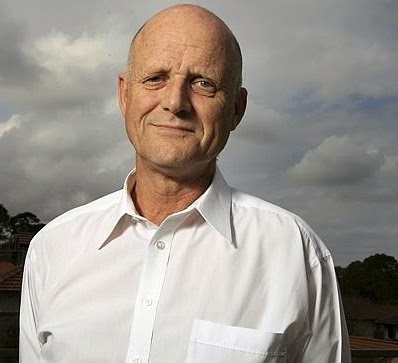
Image (L) Senator elect, David Leyonhjelm. 
With less than a day left until the release of the Abbott government’s first budget, we are hearing plenty of horror scenarios as to what it will contain.  It appears certain though that it will include tax and excise increases as well as cutbacks in services.

In something of a first for minor parties, the Liberal Democrat Party (Australia’s libertarians) has bitten the bullet and released its own budget, proving that it is a serious player in the nation’s political spectrum.  Significantly, rather than the Liberals continuing deficits, the LDP has come up with a surplus without raising taxes.
This surplus may be a modest $3.1 billion, but it is a lot better than the government is expected to do, and actually lowers taxes on the upper end of the tax scale: 
DAVID LEYONHJELMThe Coalition government will release its first budget on Tuesday which will set the tone for the rest of the time in office. There is speculation that the government will make some difficult decisions to get the budget back on track. I hope those predictions are correct, but I fear they will be wrong. 
The commission of audit was a good start, but it didn’t go far enough in cutting back on government over-spending. Unfortunately, the government is probably going to water down the recommendations even further, announcing yet another budget deficit and (like Labor) making vague promises about a surplus somewhere in the future. 
The budget should be in surplus in 2014-15 and that is what the Liberal ­Democrats’ proposed budget would achieve. Anything less should be considered failure. It is easy (and accurate) to blame our current budget problems on the waste of the previous government, but that does not mean the new government should shirk its responsibility. 
The first budget of a new government speaks volumes about whether it is serious, and if the Liberal/National government does not make the tough decisions now, they never will. …… The current government has spoken at length about the need for economic reform, but has so far been silent on the two most obvious areas where reform would boost economic prosperity – income tax cuts and labour market deregulation. 
Instead, the government is now considering income tax increases, which is not only contrary to previous undertakings but also economic folly since it will raise nearly no revenue while slowing the economy. Tax increases are a step in the wrong direction; we need income tax cuts. 
Tax cuts must be linked with spending cuts. In Australia every year, nearly $200 billion is taken from workers and then given back to the same families in the form of ­government handouts or subsidies. This is wasteful, inefficient and unnecessary. Below I outline various ways to reduce middle class access to government handouts, but the quid pro quo of that must be income tax cuts so that productive people can keep the rewards of their hard work. 
Not only will tax cuts reduce the wasteful tax-welfare churn, but lower income tax rates will encourage investment and innovation, reduce tax avoidance and boost economic growth, resulting in more jobs and higher wages for all Australians. 
The top marginal tax rates in Australia exist mostly because of the politics of envy. It is well known that the top tax rate raises very little revenue while causing significant economic costs, and that the main reason it is retained is to pander to the tall poppy syndrome. We can no longer afford such petty indulgences if we wish to encourage our highly skilled people to direct themselves toward the productive economic service of others, and to reward those efforts. 
The top marginal tax rate (45 per cent) should be abolished, which would mean the second top rate (37 per cent) became the top rate. Going further, a top tax rate of 37 per cent is still too high and causes significant economic damage. This should be cut down to 33 per cent. Once we factor in the falsely named “Medicare levy” this would bring it to 35 per cent. While this is still too high, further cuts should perhaps wait until they can be part of more fundamental tax reform as budgetary circumstances improve. 
These tax cuts will not change revenue by very much, since the lower rates will be offset with a larger tax base . Using mainstream estimates of the “elasticity of taxable income” and measures of income dispersion calculated from ATO statistics, the proposed reform will lead to a relatively modest loss of only $3 billion. The full consequences of the tax changes are shown in the below chart. …
… The relationship between the minimum wage and employment is measured by the “minimum wage elasticity of labour demand”, for which the best estimates in Australia comes from a study done by Andrew Leigh (now a Labor MP) in which he found an elasticity of minus 0.29. 
Using the estimates from Leigh and current inflation figures, it is simple to calculate that a minimum wage freeze would result in about 100,000 new jobs for low-skilled workers, reducing the unemployment rate from 6 per cent down to about 5.5 per cent (depending on participation rate changes). 
While the economic benefits from more work and less welfare are significant, the social consequences of helping people avoid welfare dependence is a potentially larger (though unquantifiable) benefit. The main cause of poverty in Australia is unemployment and anybody who truly cares about combating poverty must celebrate any policy that helps people find a job. … 
… The biggest single cost for the government is direct welfare spending, in particular family payments and pensions. While some people like to complain about so-called “dole bludgers”, the truth is that unemployment allowances are relatively modest ($11 billion) compared with the cost of family payments ($36 billion) and assistance for the aged ($58 billion). In particular, family payments are often not well targeted and amount to middle-class welfare. Both the Centre for Independent Studies and the Commission of Audit suggested removing Family Tax Benefit (part B) and the Schoolkids Bonus, saving about $6 billion. 
Pension reform is necessary, but this is not an area where costs can be decreased quickly. In the short term, the government should introduce a one-year freeze on all increases in welfare payments. This would save about $4 billion a year. …
Read the whole thing at the link above.


Nov 15, 2013

Repealing the carbon tax


This is the text of a submission by the Carbon Sense Coalition to the Australian Government on the Proposed Repeal of the Carbon Tax.

The Case for Repeal

We support the immediate repeal of the carbon tax. This tax was introduced by stealth, and the justification for its introduction is spurious. It should be repealed or made ineffective immediately.

We are told its purpose is to “reduce carbon pollution” – just three words, each of which is based on a lie.
•                “Reduce”: The effect of Australia’s carbon tax on the amount of carbon dioxide in the atmosphere is so tiny as to be undetectable and any miniscule reduction would be totally swamped in the far bigger natural seasonal variations of carbon dioxide levels. The effect on global climate, if any, would also be too small to be measured and of no benefit to the climate or life on Earth.
•                “Carbon”: It is NOT a tax on carbon. Carbon is a solid – either soft and black like graphite and soot, or crystalline, hard and beautiful like diamond. It is definitely not the colourless gas created when carbon is burned. The “carbon” tax falls mainly on carbon dioxide, a colourless, harmless natural gas which has always been present in Earth’s atmosphere, usually in far greater amounts than at present. The use of “carbon” when referring to “carbon dioxide” is a deliberate deception. It would be like calling liquid water by the name “hydrogen”, a major element in the water molecule which is a dangerous explosive flammable gas. Based on the carbon example, a tax on water vapour (another “greenhouse gas) would probably be called “The Hydrogen Tax” by government propagandists.
•                “Pollution”: Carbon dioxide is not a pollutant, and should never have been called one. It is the essential gas-of-life for all plants and they support all animals on Earth. It is no more a pollutant than oxygen, which is the gas-of-life for animals, or water vapour which is essential for all life. All three gases have effects on earth’s surface temperature, and on surface life, and such effects are usually highly beneficial. Additional carbon dioxide has been improving and will continue to improve the growth rate and drought tolerance of all plants on earth. Far from polluting the Earth, extra carbon dioxide has been greening the globe for decades.
There has been no attempt at an independent cost benefit analysis to justify the tax. 

The costs of the carbon tax are substantial and will increase every year it remains. It will increase the costs of locally produced coal, gas, electricity, cement, steel, timber and everything made using these essential products. If these businesses are exempted or compensated, the tax will be totally ineffective and taxpayers in general will bear the cost of the extra red tape, bureaucracy and churning of funds. If they are not exempted, value-adding businesses such as further processing, fabricating and manufacturing will be forced to close and relocate to more sensible business environments. 

There are no proven benefits. In fact, even if the tax was effective in reducing the amount of carbon dioxide in the atmosphere, this result would not be beneficial to life on Earth.


To introduce such a costly tax without even the pretence of an independent public enquiry into the likely costs and benefits will (hopefully) stand for decades as Australia’s worst example of bad public administration.


There has also been no independent enquiry into the science supporting this massive gamble with the job prospects and economic future of Australians. The government has relied totally on local and overseas activists with a radical agenda, or on its own employees and grant recipients, most of whom have bent to the political will and supported the views of their pay-masters. The continual appeal to “consensus” and “authority” is clear evidence that the scientific case is weak.


The conclusion is obvious – this tax must be repealed as soon as possible. Australian voters have twice supported a political platform that promised that there will be no carbon tax under their administration. It is time the people’s opinion was heeded.


The Mechanism of Repeal

The main legislative support for the introduction of the war on carbon in Australia is contained in about 25 separate bills passed quickly and gleefully one day in 2011.

In an instant, a new class of carbon tax victims was created as well as another class of carbon tax beneficiaries. 

The passage of time has entrenched and emboldened the beneficiaries and triggered the evasive ingenuity of the victims.  Neither should be rewarded or punished any longer. 

No new injustice will be created by instantaneous restoration of the situation to that which prevailed on the eve of the introduction of the carbon tax legislation. 

To organise repeal by introducing almost as many new bills as are being emasculated is just creating legislative pollution which is sure to provide employment for smart lawyers for years to come. There should be no transitional arrangements – those receiving benefits should see them stopped immediately, and those paying the costs should get immediate and total relief.

The most appropriate repeal bill should say: “The sole purpose of this Carbon Tax Repeal Bill is to totally repeal the following Bills and regulations (and then list them all). The Speaker should then say “Those in Favour. . . Those against. . . I think the ayes have it. Session closed”.


If there is any opposition or delay to the repeal program in Parliament, the government should use its regulatory power and ingenuity to reduce the carbon tax rate to zero. It should also set to zero any penalties for failure to comply with the as-yet un-repealed Bills.


Related Matters Needing Attention

As part of this carbon tax repeal session, several more things need to be done:
1.              Remove carbon dioxide from the list of pollutants requiring reporting under the National Pollution Inventory Scheme.
2.              Australia should withdraw from the Kyoto Agreement, thus falling into line with China, India, Japan, Canada and USA.
3.              Cease funding or supporting in any way in the operations of the IPCC. This body has become a destructive and costly international bureaucracy. Australia should push to limit its activities, cut off its income and close its operations.
4.              There should be no new price control or surveillance legislation. Many semi-public bodies such as electricity generators are already subject to price justification/competition tribunals. All this has done is allow or even encourage generating and distribution companies to invest heavily in building or upgrading facilities knowing they will get a guaranteed return on those investments. More useless price surveillance will just add to the costs and overheads of the industry.
5.              The Climate Change Authority is still spreading nonsense reports. The responsible minister should immediately change the board, re-deploy staff to more productive jobs and lock the corporate doors. It should then be abolished as soon as possible.
6.              The government should delay the introduction of legislation to support their direct action climate program until there has been an independent enquiry into global warming science and a rigorous cost-benefit analysis of “Direct Action”.
7.              Finally, John Howard’s Renewable Energy Targets legislation should be repealed. These targets act like a hidden carbon tax, whose cost will continually escalate as significant renewable energy sites become harder to find and connect to the power grid. No one should be forced to use or pay for any special type of energy.
Summary Recommendations
1.              The “Bill to repeal the Carbon Tax” should be no longer than one page and should say just that – no transitional arrangements.
2.              If the repeal bill is delayed in Parliament, the government should use its regulatory ingenuity to reduce the carbon tax rate and the benefits to zero and set to zero any penalties for failure to comply with the as-yet un-repealed Bills.
3.              Carbon dioxide should be removed from the list of pollutants covered by the National Pollution Inventory Scheme.
4.              Australia should withdraw from the Kyoto Agreement.
5.              Australia should cease all financial or other support for the IPCC.
6.              There should be no new price surveillance introduced when the carbon tax is repealed.
7.              The Climate Change Authority should be abolished as soon as possible. Pending abolition, it should be de-staffed, de-funded or re-deployed.
8.              The “Direct Action” legislation should be put on hold until a thorough independent enquiry has been held into global warming science and a comprehensive cost-benefit analysis has been completed.
9.              The Renewable Energy Targets should be repealed together with all other market, price or subsidy mechanisms which favour renewable energy.


Submitted on behalf of the Carbon Sense Coalition by: 

Viv Forbes
Chairman

Disclosures: The above report was produced by Viv Forbes with assistance from several other members of the Carbon Sense Coalition. No one prompted or paid us to produce it. 

Everyone in Australia has a vested interest in this legislation, some winners, and some losers.

Viv Forbes and his wife own and operate a livestock grazing property which will benefit from repeal of the carbon tax. He also uses electricity, diesel, petrol and gas all of which will benefit from repeal of the carbon tax. He is also a non-executive director and small shareholder in an Australian coal exploration company. The operating costs of this company will benefit if the carbon tax is repealed and any future underground mining operations will also benefit with lower costs. However this company’s expected market for coal is overseas in Asia, and Australian coal exporters will benefit if Australian processing, smelting, refining and manufacturing plants are forced overseas by the carbon tax. Finally, he is a father and grandfather who supports repeal of the carbon tax because that will create stronger, richer Australia with better opportunities for those who want to work and prosper.


Petition.
If you are concerned that federal and state governments are spending billions of taxpayer funds on green climate follies, without due diligence, here is a petition demanding a cost-benefit study be done. Please sign and help it along:
http://www.ipe.net.au/ipeframeset.htm


John Howard Joins the Deniers (well almost).


John Howard did many silly things which still haunt us. One of the worst was when his government passed the Mandatory Renewable Energy Targets legislation in 2000, after an off-the-cuff election promise in 1998. This acorn has developed into Australia’s most costly carbon tax. It has permanently saddled our electricity system with a slab of costly intermittent energy, and created a mendicant class of electricity producers and equipment suppliers with a huge vested interest in staying on that gravy train.


Then in a silly promise before the 2007 election, Mr Howard promised, if elected, to introduce an Emissions Trading Tax. But Mr Rudd outdid him, describing the ETS as the answer to the “great moral and economic challenge of our time”. Unfortunately Rudd won the election and unfortunately kept his promise.

Despite these black marks, Mr Howard has seen the light (despite the fact that he says he has only read one sceptical book on global warming policy).

In a speech in UK to the Global Warming Policy Foundation entitled “One Religion is Enough” he said “The high tide of public support for over-zealous action on global warming has passed”. 
For his full speech see here
The Many Benefits of CO2


How humanity and the rest of the biosphere will prosper from this amazing trace gas that so many have wrongfully characterized as a dangerous air pollutant.
Keeping a Sense of Perspective on Global Warming. 


There is nothing unusual or worrying about the modern warm era (as long as it does not end):

Funds Flow in, in Enormous Dollops.

In the previous issue of Carbon Sense, we advised that our finances were $124 in the red for the month (while Flannery raised $1 million). This is the response from one supporter: 


Funds, in enormous dollops, flow in to Viv:– slightly tongue-in-cheek, I just deposited (exactly….) $124 into your account.   Didn’t send a dime to Flannery though.


All that aside, the last several weeks have been a very cheerful period, as we have watched a lot of the nonsense being dismantled by people with a bit of sense

Oct 19, 2013

The government cost of Halloween


The Advocates for Self Government have reprinted an assessment of the costs that the US government imposes on parents during Halloween by the Cost of Government Center from 2011: 
Each year, parents spend $1 billion on kid costumes for Halloween. On average, for the estimated 41 million trick-or-treaters, each kid wears a costume costing almost $25 -- a hefty sum for parents who know this annual investment is only going to get a few hours of use. Taxes make up a shocking amount of that cost.  
Kids' costumes are almost all made of heavily taxed synthetic fibers. On top of the state sales tax paid at the register, the government increases the cost of buying these costumes by imposing a 17 percent tariff on many of these imported costumes. Businesses not only have to absorb these costs, but also those imposed by income taxes, payroll taxes, corporate taxes, property taxes, capital gains taxes, unemployment insurance taxes, workmen's compensation taxes, and other payments to federal, state, and local forms of government.   
When all is said and done, government taxes compose a terrifying 47.82 percent of the cost of the average kid's costume -- $11.66 of the average price. Boo! 
But the government's tricks don't end there. The Halloween season brings with it $2 billion in candy purchases. Due to excise taxation on sweets in addition to the burden of taxes placed on the confectionery industry, the government takes a 30.81 percent bite out of the average trick-or-treaters' candy haul. Ouch! 
Altogether, the cost of celebrating our scariest holiday is made all the more frightening by the costs imposed by government: hidden taxes and other costs constitute 40.91 percent of your Halloween celebration.  
This amounts to a burden of $688 million -- or $16.80 per kid. The remaining $1.3 billion of candy not distributed during trick-or-treating represents another $406 million in taxes. 
Finally, after including taxes on adults for decorations and costumes the total Halloween tax bite comes to… a bloody and bruising $2.7 billion. 
And the cost is even higher if you attend a spooky party with alcoholic beverages. Wine, distilled spirits and beer are all subject to more hidden taxes. Going out to dinner instead of trick-or-treating also carries higher government costs. And if you have to drive your kids to trick-or-treat, the government bite of gasoline also takes a hefty bite out of your wallet. 
Wherever you turn, wherever you go, you can't escape the bloodsucking horror of… the federal government.
At this time, it is probably worth quoting:
"If you've never seen 'The Walking Dead,' it's basically a bunch of bloodthirsty zombies slowly devouring what's left of America. No wait, that's C-SPAN." – Craig Ferguson Oct. 11, 2013.