Trigger warning:

This site may, in fact always will contain images and information likely to cause consternation, conniptions, distress, along with moderate to severe bedwetting among statists, wimps, wusses, politicians, lefties, green fascists, and creatures of the state who can't bear the thought of anything that disagrees with their jaded view of the world.
Showing posts with label Libertarian. Show all posts

Aug 5, 2014

Leyonhjelm doing the right thing for no good reason (or something)


Statists struggle to understand libertarians on those odd occasions where they actually bother to try to get a handle on the thinking behind non-interventionism and personal liberty.
Patrick Stokes, a lecturer in philosophy at Deakin University is an example of this phenomenon.  Patrick seems to think that it is not enough to accept that it is OK to let people do stuff that you might not care to do or might even not like on the grounds that it is non-coercive and doesn’t affect you.  You have to have a good reason to leave people alone in his jaded point of view.
Stokes starts off with the antics of Philip Nitschke in the euthanasia field, then attempts to link this with the LDP’s stance on same sex marriage.  He demonstrates his confusion on the subject matter by trying to link libertarian thinking to the old left/right paradigm: 
This problem isn’t unique to the euthanasia debate. Last week, newly-minted Liberal Democrats senator David Leyonhjelm announced plans to introduce a bill to legalize same sex Marriage. 
As a libertarian, Leyonhjelm has called for lower taxes and a massively reduced role for government. Yet his position on marriage equality aligns him with a policy more closely associated with the political left. … 
… Philosophers such as Richard Mohr have argued that committed same-sex relationships already are marriages in a substantive sense, and the law should simply recognise that.For libertarians (for the most part), the only real substantive good is individual autonomy. 
Leyonhjelm doesn’t argue, as far as I can see, that certain types of relationship have a special, substantive value; he simply thinks, “It is not the role of government to define relationships.” (In which case, we might ask, why should governments get involved in certifying marriage at all?) 
Those of us who support same-sex marriage can probably live with that tension, if it delivers the outcome we want. But the philosophical tension between approaches is still there. 
And the very moral thinness of libertarianism, its refusal to trade in any ethical currency other than liberty, sits uneasily with issues of life and death, where all sorts of other moral considerations are in play. …
There is no explanation offered as to why we should think, “that certain types of relationship have a special, substantive value.”  In an argument for marriage equality, it simply makes no sense to claim that one form of relationship is special, something that those opposing SSM claim as a key point.  Such a claim is counter-productive.
It is nice to know though, that statists arguing the issue as a special case for SSM as some kind of state granted privilege are prepared to hold their noses and accept Leyonhjelm’s support, even if they don’t really like it. 
He then goes on with the following doozy:
One reason death is viewed as normally being a harm to the person who dies is that it deprives us of goods we would have enjoyed had we lived. In a situation where there is nothing left in the patient’s future but pain and loss of dignity, there are no more goods to lose.
For those of us who deal more with the real world rather than academic navel gazing, the biggest reason for death to be considered a harm, is that we don’t get to live longer. 
At this point, he exposes the weakness of his argument under the rather dramatic heading of:
Libertarianism’s moral moonscape 
If you think, as Nitschke apparently does, that the question here is simply about exercising a right to suicide, why should it matter whether someone is terminally ill or not? If someone wants to die, and they’re clear-headed enough to make competent decisions, who are we to interfere with their personal liberty in order to stop them? … 
… When teaching classes on the ethical debate over euthanasia, I’ve found that students often seem to struggle with explaining why it should matter whether the patient is dying (or at least permanently debilitated) or not. Yet from a mercy perspective, it matters very much that there are, in fact, no truly good options left open. …
It sounds like those students have a more consistent view than their teacher.  To assume the right to deny a person the right to die, we are adopting the assumption that we have a right to insist that they live, even against their own wishes.  No explanation of this position is offered.
Assuming the right to refuse the right to die implies a form of ownership over the person involved which is an anathema to all decent civilized people.  The problem most of us have with Nitschke’s position on the recent suicide of a depressed 45 year old is that he didn’t advise him to seek psychiatric advice.
Nitschke is not a libertarian, never was, and never will be.  He is a statist leftist who proved in the Western Australian senate election rerun, that he prefers to support leftist parties, even those who oppose his cause to a libertarian party that in the main, supports his single issue.
In attempting to secure some sort of dispensation from the state in relation to his plea for special interest, he has fluked a position where the LDP has a similar morality based position.  This does not make him a libertarian in any way, shape, or form.
The LDP policy on voluntary euthanasia can be found here. 

Jul 17, 2014

James McGrath; another ‘Libertarian’ senator?

On the basis of Senator James McGrath’s maiden speech he has a lot going for him among libertarians. Some of his views are straight from the Liberal Democrat’s playbook, while others are consistent with our aims:
  
Getting rid of compulsory student union fees isa step in the right direction.  The idea that an organisation be allowed to charge a compulsory fee on those it claims to represent because of their employment or other status is akin to granting ownership of those people or allowing a taxation power over them.
Having a senator with a strong commitment to freedom of speech is a welcome addition to a house that sadly lacks many members who have either an understanding, or real commitment to the concept.  It will be interesting to see how many qualifications he puts on it, given that the LNP tends to be rather PC whipped and timorous on the issue.

His support for the abolition of the federal departments of Health, and Education are basically the same as the LDP case and for the same reasons.  Neither of them actually run a school or hospital and merely intrude on what is a state responsibility.
There are though a number of other departments and bodies that need the axe, the Department of Climate Change, being one that immediately comes to mind, as well as the Clean Energy Finance Corporation.  The first is designed to engage in histrionics on Global Warming, while the latter helps the new generation of carpetbaggers to invest in more expensive green energy that is compulsorily sold off to consumers under a government mandate.
There is no place in a free society for the government picking winners or engaging in social engineering.
This raises the issue of his call to increase the GST by 50% and extend it to cover all purchases including food ‘with compensation for low income earners’.  While the taxes he mentions need to be abolished or reduced, especially payroll tax, slimming down the federal government and passing some of the savings to the states would be a better idea than a tax increase.
The idea of a consumption tax replacing stupid and iniquitous ones like payroll tax is admirable however, these taxes were supposed to be abolished under the original GST proposal, but weren’t. This seems to be rewarding bad behaviour by the states. 
Low-income earners need just as much basic foodstuffs as the rich although perhaps at a lesser quality.  There seems little point in increasing the price by 15%, then compensating them for it.  This merely creates churn, which requires more public servants to administer the scheme.
GST funding is not distributed rationally among states but is rather sent out on the basis of ‘each according to his ability, to each according to his need’, which would have to be reformed for any sort of fairness to exist.
Another problem is the ABC.  While he correctly makes the case for it to be sold or abolished, he claims that it should be done as some sort of penalty for left wing bias.  In an age where there are numerous sources of commercial TV and radio entertainment there seems to be little reason to spend over a billion dollars per year providing a government network to compete with that.
It’s rather irrelevant that it’s left wing; that is merely the consequence of being a state media entity dedicated to providing ‘high brow’ stuff that the ‘common heard’ doesn’t require and is therefore not catered fo by commercial networks.  We don’t need it.
The senate will be better for having this guy in it depending on whether he follows through, or merely votes the party line, good or bad.  

Jul 12, 2014

Leyonhjelm inspires another cartoonist

Giving inspiration to cartoonists can be a mixed blessing, frequently a negative one, even a brutal experience.  Still, if it is a good likeness, your name is spelt right, and whatever it is highlighting is not a really bad, it can be as good as a big advertising budget for getting your name out there.
LDP Senator, David Leyonhjelm has come off very well, getting the cover of The Spectator Australia on his election.

It is understood that the original is proudly displayed in his office.

Recently he was seen commenting on how we have a government he likened to Godzilla, a reasonable assessment of the enormous burden of the state on the population with its attendant pernicious imposition of itself into every aspect of our daily lives as well as our wallets in order to fund its depredations.

This appears to have inspired well known cartoonist Stephen Zeg Gunnell (Zeg) to come up with his offering on the subject, which rather than Godzilla uses the theme of David and Goliath to illustrate this situation and David's role in opposing it.


Jul 10, 2014

First Australian senator elected on libertarian platform gives his maiden speech


All of Australia’s libertarians are feeling the joy today with the maiden speech of David Leyonhjelm in the senate this afternoon.  We have had to wait for nine months since his election last September, for this moment.
This is the first time in Australia’s history that a libertarian party has elected anyone into federal politics. Here is what he had to say:
This has been the culmination of a long haul for many of us.  From a personal standpoint I have pursued libertarian politics since the mid 70s with the formation of the Progress Party, and later with the Liberal Democratic Party.  A few others have been at it longer, as the Workers Party preceded the Progress Party.
Nonetheless, 40 years is a long wait.  Those years have flown by like a stack of papers caught in the breeze since I first walked into a meeting called by a group that inspired me with their message; that we should control the government, rather than have it control us.
Today might seem like a culmination, but as David says, “There is much to be done.”  And as Churchill said, “This is not the beginning of the end, but the end of the beginning.”
Lets all work to take control and hand that control back to where it belongs; in the hands of the individual. 

Jun 14, 2014

“None of these candidates wins in Nevada


There has been a major embarrassment for the Nevada Democrats in their primary for Governor, with ‘None of these candidates’ winning the poll.   In fact, it wasn’t even close, NOTA getting 29.96%, and the leading candidate only pulling 24.9%.
Libertarian Republican is reporting that only one candidate beat NOTC in any county, his home one, and by a narrow margin. 
Unfortunately, this does not mean that there will be no Democrat standing in November, nor does it requite a new ballot, the second placed candidate will be nominated to stand
"None of the Above" won with 29.96% of the vote. Nevada was the first state to institute a “none of the above” line to its ballot in 1975, as a way for voters to protest weak, unqualified candidates. 
Senator Harry Reid, who runs the Democrat party in Nevada with an iron fist, told reporters earlier this year, that the candidate to run against the popular Republican Governor Brian Sandoval, would be "a respectable Democrat and someone that people know." 
Second place went to Robert Goodman, a retired state economic development commissioner, who got 24.9% of the vote. Since "none of the above" can't win under state law, virtual unknown, Goodman will be the nominee.
There is probably little point in standing a Democrat there given the extreme embarrassment associated with the ballot with their candidate clearly not meeting the expectations of the electorate.  His acceptance speech should probably start with, “Boy, is my face red.”
Libertarians have long favored the idea of a ‘None of these candidates’, or ‘none of the above’ option in ballots to allow voters the option of letting the parties know that they are dissatisfied with the quality of the candidates on offer.
Parties tend to promote hacks or shills who can be relied on to toe the party line, good, or bad, while voters have to put up with whichever idiot is the least worst option for the term of the elected body.  The libertarian position though, is that in the event of NOTA winning, a new election should be called with those candidates excluded, or that the position should be left vacant, or unfunded.
The then Australian libertarian party, the Progress party first called for this option in 1980 when Viv Forbes made the following statement
“Election ‘illusion’,” The Canberra Times, April 21, 1980, p. 9.
The Progress Party yesterday called for an amendment to the Electoral Act to allow voters the choice of “none of the above” in all Federal, State and local elections. 
The national secretary of the party, Mr Viv Forbes, said that until voters could say “no” to all candidates, the voting system was an illusion of free choice. 
“To many people at the ballot box, the decision is as significant as the choice between arsenic and rat poison,” he said. 
“If a significant percentage of people vote ‘no’ to all candidates, it would indicate massive public disapproval of the policies of them all.”


Jun 2, 2014

Since when was driving a privilege???


Nothing any good ever came out of Victoria – Old Queensland adage
Victoria seems to be offering stiff competition for other nanny-state regimes with their latest stupidity.  Magistrates will now have the power to take away your drivers license for being drunk while walking home after a night at the pub.  It is not explained why being on foot has anything to do with driving but hey, with slogans like, ‘if one life can be saved,’ its said, it will all be worthwhile.
Effectively, this means that if you are out at the pub, get a bit pissed, and are a bit worried about how to get home a few blocks away; if you think you can still keep the car on a straight line, you might be better to take the risk on driving rather than leave it in the car park and walk.  You will be visible for longer on foot, and there is no difference in the penalty.
The government tells  the public that driving is a privilege, not a right and the editorial comes up with the same words: 
… The provisions broaden a judicial officer’s ability to suspend, cancel or disqualify an offender’s licence or learner permit for any matter, regardless of whether driving is an element of the offence. 
For anyone to lose a licence for public drunkenness would be an extreme use of the new power. Offenders can lose their licences for road rage and magistrates have wide powers to impose conditions on them.
“From today, offenders can lose their driver’s licence for road rage offences or for any other offence where the court considers doing so will better protect the community or send a clear message to the offender,” Mr Clark says. … 
 “Where a court considers the best way to pull an offender into line is by taking away their licence, it will have the power to do so.” 
A senior North East traffic policeman welcomed The Road Safety and Sentencing Acts Amendment Act 2013.  Wangaratta highway patrol Sgt Michael Connors said anything that deterred offending was welcome.
“The possession of a licence is a privilege, not a right, so if these offences are going to be committed where they shouldn’t be driving on our roads, say hoon driving or evading police, then their licence should be suspended or removed,” Sgt Connors said. ...
A drivers licence cannot really be considered a privilege, given that the roads are publicly funded and citizens are entitled to freedom of movement whether sober, pissed, or even meeting with the disapproval of the public at large, provided they are not acting in an aggressive or coercive manner.
Were a road to be privately owned, and that owner restricted the right to drive on it to friends, gay partners, climate change skeptics, or whatever, then driving on it would indeed be a privilege.
A drivers licence is given subject to meeting certain requirements in driving ability, knowledge of the road laws, and an understanding that while traveling, the driver has the ability to do so safely.
It is not an absolute right; otherwise it would arrive in the mail at the predetermined age.  It is however, a right to all who can meet the basic qualifications for receiving it, and can conduct themselves in a manner consistent with safe road use.
Any legislation that takes away the right to drive on public roads for reasons unrelated to road safety is an anathema to liberty and has no place in a free society. 

Jun 1, 2014

Australian senate; the adults in the room form their own group


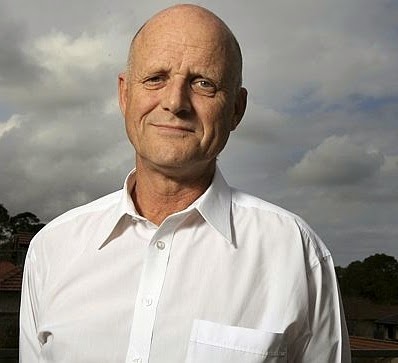
Image: Senator-elect David Leyonhjelm, of the Democratic Liberal Party
The 2013 federal election threw up a couple of excellent results for libertarians.
The first was the election of the Liberal Democrat David Leyonhjelm in New South Wales.  David is a fully committed libertarian of long standing, unswervingly dedicated to the principles of fiscal responsibility, social liberty, and capable of arguing against the trend, logically, passionately, and convincingly.
The second surprisingly was the election of Bob Day of Family First, who despite being a social conservative is just as erudite as David on fiscal matters.  While Bob is unlikely to support the full libertarian agenda, his election brought joy to most of us in that another fiscally sane member would be joining David in July.
Some worried about how a libertarian and a Socon would get along, the problem has been solved.  They have agreed to work together on fiscal matters, while doing their own thing on social policy.  For some reason, the press see this as a ‘roadblock’: 
… David Leyonhjelm, the NSW senator-elect representing the Liberal Democrats, has revealed he would vote in alliance with South Australia's Bob Day of Family First when the new Senate sits from July 1. 
They have agreed to vote together on all economic issues, but will decide their own positions on social issues. As a self-described libertarian, Mr Leyonhjelm supports same-sex marriage, for example, whereas Family First is opposed to it. 
The two-member bloc is half the size of the Palmer United Party-Ricky Muir alliance, but is likely to provide some headaches for the government as it seeks backing for its legislative agenda, particularly if that involves any new taxes. 
Mr Day believes the minimum wage should be lowered to get more people into work and taxes should be lowered across the board.  Among the policy agendas of Mr Leyonhjelm is the full privatisation of all school and hospital services, a lower minimum wage and lower tobacco taxes. 
He said: ''Unlike the PUP senators, who are only united by Clive [Palmer]'s funding, Bob and I share the same values. That makes us a mini voting bloc.   Mr Leyonhjelm said he would defer to Mr Day on any industrial relations issue and Mr Day would take his advice on agriculture. 
Prime Minister Tony Abbott is leading negotiations with the new crossbenchers. He met with Mr Day on Wednesday and Mr Leyonhjelm in Sydney on Friday.
Mr Leyonhjelm said Mr Abbott laid out his legislative agenda for July, which focused on the abolition of the carbon and mining taxes, restoration of the Australian Building and Construction Commission and changes to the Fair Work Act. 
Speaking after the meeting, Mr Leyonhjelm said: ''I quite like the guy; he speaks his mind, a bit like me.'' 
On Tuesday, Mr Day and Mr Leyonhjelm delivered speeches to the Centre for Independent Studies. Mr Leyonhjelm said: ''We will push for doing less on nanny state stuff. An end to plain packaging, lower tobacco taxes and fewer smoking rules affecting private property. 
''Stop funding public health advocates who want to control what we eat. Stop funding the environmental organisations that oppose everything about modern society. 
''I also intend to press buttons on health and education. There is no justification for the government being a service provider in these … Service providers, whether they are for profit, charitable or community, will do the job better than public servants.'' 
Mr Leyonhjelm said when it came to smaller government, ''I do not draw the line anywhere''.  ''I have every intention of using my vote to try and make a difference,'' he said. ''I will use argument, reason, pleading and, occasionally, blackmail.'' 
In his speech, Mr Day questioned why, when Newstart allowance was $250 a week and the minimum wage was $650, people could not choose to work for less than the minimum wage but more than the dole. 
''We praise people who work for zero money - volunteers who work up to 40 hours a week in op shops and nursing homes - but we don't allow them to work for more than zero until you reach $650. It's absurd,'' he said.
It’s just as simple as that.  Leyonhjelm and Day are probably the only two adults and economic rationalists in the senate.  Neither is hamstrung by the need to follow the crazed party line of Abbott, Shorten, the Greens, or the personal opinion of Palmer and have sensible ideas to pull the nation out of the shit.
Neither are in any way obstructionist, and both will be quite cooperative as long as Abbott and his henchmen are prepared to talk sense.

May 18, 2014

Palmer for talk, Liberal Democrats for action


Some years ago, I was talking to the senior mine geologist about the drilling program when a winder driver asked about a problem she had and wanted to know whether she should talk to the general manager or the underground one.  
The geologist replied, “If you want something done see the underground manager, if you just want to talk about it, the general manager is just the man for it.”
This pretty much equates to the difference between the Liberal Democrats and Palmer.
Palmer is blowing off a bit of froth today about his chances of becoming prime minister if Tony Abbott calls a double dissolution: 
… Mr Palmer has predicted a bold, new direction for Australian politics where his party has a majority in the lower house and he is prime minister. 
The mining magnate has dared Prime Minister Tony Abbott to call a double dissolution election if he cannot pass the budget and says the Palmer United Party will run in every lower house seat and can claim victory.  
“Our members think there should be an election straight away,” Mr Palmer told Fairfax Media.  “They are ready and standing by.” … 
… Asked to explain precisely how he could become prime minister, Mr Palmer predicted that his party could take votes from the Coalition and added: “I think we can get the votes we need to make Australia better.'' 
“I think there will be a new change in the dynamic of Australian politics. In the lower house we will be going out to win it.''  Mr Palmer predicted the PUP could also claim 24 to 30 seats in the Senate. …
If voters want to be sold a pup, then Clive is just their man; he even has the right party name for it.  PUP is a policy free zone; the policy section of their website lists four or five one sentence generic positions that mean as close to nothing as Palmer can get them.
If you want to know more, he refers you to a ‘policy document’ which is actually a long series of press releases, some of them contradictory, and giving no detail of any proposed actions.
PUP mirrors Clive Palmer.  Clive is mainly famous for picking and losing fights, and travelling around the nation bitching about everything going on.  This is fine as far as politics go, but sooner or later, you have to come out with meaningful solutions.
The Liberal Democrats on the other hand feature a full section of detailed policies on pretty much every aspect of matters covered by politics.  Nothing is hidden; there are no surprises if the party is elected.  It is all out in the open.
Nobody knows what Palmer would do if PUP got up.  We all know what he complains about, but there are no solutions offered; his appeal is restricted to low information voters who want to make a protest, assuming that it will all be OK.
Palmer has spent the past week howling to the moon about the budget, saying he will block it, complaining about every aspect of it, but has not had the courage of his convictions (if any) to come up with an alternative. 
The Liberal Democrats on the other hand released a full and detailed budget a day prior to Abbott.  In fact, we were the only party to do so.  It may not appeal to everyone but everyone detests the LNP one.
We all have to step into the big unknown at some stage, but voting for Palmer is a step too far.

May 17, 2014

OK Liberals West Australia, what will you do about it?

 “If, from the more wretched parts of the old world, we look at those which are in an advanced stage of improvement, we still find the greedy hand of government thrusting itself into every corner and crevice of industry, and grasping the spoil of the multitude. Invention is continually exercised, to furnish new pretenses for revenues and taxation. It watches prosperity as its prey and permits none to escape without tribute.” – Thomas Paine
Liberals WA has a posting (below) up on their Facebook page today complaining of the way in which GST revenue from that state is distributed across the nation.  The reality is that of all revenue raised by this tax in the state, 38c (soon to go down to11c) in the dollar goes back there.  The rest goes to other states. 


Being Liberals, they tend to have a short attention span and have not gone on to check just how badly WA is treated by the tax system as a whole.  The same principle applies across the entire system; it is not just GST, but income, company and every other tax that rips them off.  The figure of $3.6 billion is only a small part of it; the total figure is around $20 billion from all taxes.
This issue was first raised by Liberal Democrat senator elect, David Leyonhjelm in the lead up to the West Australian senate election #2.
This welfare system involves two states – Western Australia and New South Wales – transferring funds to the other states and territories. WA transfers $20 billion a year, equivalent to more than $8,000 a year from each West Australian, while NSW transfers more than $2 billion a year, over $300 per person. 
Out of this system Tasmania and the Northern Territory draw nearly $4 billion a year each. That means each Tasmanian, rich or poor, gets nearly $8,000 per year from the people of WA and NSW while Northern Territorians get more than $16,000. 
The state-to-state welfare system is complicated and to unravel it is no easy task. Some think it simply involves the GST, but that only plays a small part. Of the $8,000 a year that each West Australian transfers to the east, only $600 is a result of paying GST to Canberra.
During the senate rerun, Clive Palmer threw huge resources at the issue and made significant inroads as a result.  We all remember those Youtube videos of Canberra snatching bread from hungry babes.  Clive, of course didn’t actually present a policy on the issue and tell the people what he was going to do about it; there was no need.  The implication that he disapproved of it was enough.
In view of this, it’s no wonder the WA Liberals have now found sufficient voice to bitch about it.
The problem they have with this, is that their version of ‘the world’s greatest treasurer’, Joe Hockey ridiculed Palmer for raising the issue and challenged him to say just what he would do about it, given his senators from Tasmania and Queensland.
So dudes, what are you going to do about it given your federal party believe that you have a duty to support the green obsessions of the Apple Isle?
The truth is that out of all the critics of the system, only the Liberal Democrats have a policy against tax transfers: 
The LDP will seek to: 
                 Limit the federal government to defence, immigration, basic public services (eg passport services, regulation of hazardous materials, air and sea transport regulation), and assistance to the least well off. 
                Stop all transfers from the federal government to other levels of government, including grants from the pool of GST revenues.

May 13, 2014

The Liberal Democrat Budget

Image (L) Senator elect, David Leyonhjelm. 
With less than a day left until the release of the Abbott government’s first budget, we are hearing plenty of horror scenarios as to what it will contain.  It appears certain though that it will include tax and excise increases as well as cutbacks in services.

In something of a first for minor parties, the Liberal Democrat Party (Australia’s libertarians) has bitten the bullet and released its own budget, proving that it is a serious player in the nation’s political spectrum.  Significantly, rather than the Liberals continuing deficits, the LDP has come up with a surplus without raising taxes.
This surplus may be a modest $3.1 billion, but it is a lot better than the government is expected to do, and actually lowers taxes on the upper end of the tax scale
DAVID LEYONHJELMThe Coalition government will release its first budget on Tuesday which will set the tone for the rest of the time in office. There is speculation that the government will make some difficult decisions to get the budget back on track. I hope those predictions are correct, but I fear they will be wrong. 
The commission of audit was a good start, but it didn’t go far enough in cutting back on government over-spending. Unfortunately, the government is probably going to water down the recommendations even further, announcing yet another budget deficit and (like Labor) making vague promises about a surplus somewhere in the future. 
The budget should be in surplus in 2014-15 and that is what the Liberal ­Democrats’ proposed budget would achieve. Anything less should be considered failure. It is easy (and accurate) to blame our current budget problems on the waste of the previous government, but that does not mean the new government should shirk its responsibility. 
The first budget of a new government speaks volumes about whether it is serious, and if the Liberal/National government does not make the tough decisions now, they never will. …… The current government has spoken at length about the need for economic reform, but has so far been silent on the two most obvious areas where reform would boost economic prosperity – income tax cuts and labour market deregulation. 
Instead, the government is now considering income tax increases, which is not only contrary to previous undertakings but also economic folly since it will raise nearly no revenue while slowing the economy. Tax increases are a step in the wrong direction; we need income tax cuts. 
Tax cuts must be linked with spending cuts. In Australia every year, nearly $200 billion is taken from workers and then given back to the same families in the form of ­government handouts or subsidies. This is wasteful, inefficient and unnecessary. Below I outline various ways to reduce middle class access to government handouts, but the quid pro quo of that must be income tax cuts so that productive people can keep the rewards of their hard work. 
Not only will tax cuts reduce the wasteful tax-welfare churn, but lower income tax rates will encourage investment and innovation, reduce tax avoidance and boost economic growth, resulting in more jobs and higher wages for all Australians. 
The top marginal tax rates in Australia exist mostly because of the politics of envy. It is well known that the top tax rate raises very little revenue while causing significant economic costs, and that the main reason it is retained is to pander to the tall poppy syndrome. We can no longer afford such petty indulgences if we wish to encourage our highly skilled people to direct themselves toward the productive economic service of others, and to reward those efforts. 
The top marginal tax rate (45 per cent) should be abolished, which would mean the second top rate (37 per cent) became the top rate. Going further, a top tax rate of 37 per cent is still too high and causes significant economic damage. This should be cut down to 33 per cent. Once we factor in the falsely named “Medicare levy” this would bring it to 35 per cent. While this is still too high, further cuts should perhaps wait until they can be part of more fundamental tax reform as budgetary circumstances improve. 
These tax cuts will not change revenue by very much, since the lower rates will be offset with a larger tax base . Using mainstream estimates of the “elasticity of taxable income” and measures of income dispersion calculated from ATO statistics, the proposed reform will lead to a relatively modest loss of only $3 billion. The full consequences of the tax changes are shown in the below chart. …
… The relationship between the minimum wage and employment is measured by the “minimum wage elasticity of labour demand”, for which the best estimates in Australia comes from a study done by Andrew Leigh (now a Labor MP) in which he found an elasticity of minus 0.29. 
Using the estimates from Leigh and current inflation figures, it is simple to calculate that a minimum wage freeze would result in about 100,000 new jobs for low-skilled workers, reducing the unemployment rate from 6 per cent down to about 5.5 per cent (depending on participation rate changes). 
While the economic benefits from more work and less welfare are significant, the social consequences of helping people avoid welfare dependence is a potentially larger (though unquantifiable) benefit. The main cause of poverty in Australia is unemployment and anybody who truly cares about combating poverty must celebrate any policy that helps people find a job. … 
… The biggest single cost for the government is direct welfare spending, in particular family payments and pensions. While some people like to complain about so-called “dole bludgers”, the truth is that unemployment allowances are relatively modest ($11 billion) compared with the cost of family payments ($36 billion) and assistance for the aged ($58 billion). In particular, family payments are often not well targeted and amount to middle-class welfare. Both the Centre for Independent Studies and the Commission of Audit suggested removing Family Tax Benefit (part B) and the Schoolkids Bonus, saving about $6 billion. 
Pension reform is necessary, but this is not an area where costs can be decreased quickly. In the short term, the government should introduce a one-year freeze on all increases in welfare payments. This would save about $4 billion a year. …
Read the whole thing at the link above.