Trigger warning:

This site may, in fact always will contain images and information likely to cause consternation, conniptions, distress, along with moderate to severe bedwetting among statists, wimps, wusses, politicians, lefties, green fascists, and creatures of the state who can't bear the thought of anything that disagrees with their jaded view of the world.
Showing posts with label budget. Show all posts

Oct 29, 2014

Cormann reaches for his pen and his phone


Cartoon: By Bill Leak  
President Obama has been accused of ruling by decree in our language or to use the US term, by executive orders.  
Under this system a king, emperor, dictator, autocrat, or sundry despot picks up the phone and orders that his will be done.
It seems now that the minister for finance, Mathias Cormann has caught the bug and is using his pen and his phone, (to use the President’s own term) to increase fuel excise without senate approval: 
MOTORISTS are set to pay a $4 billion increase in fuel tax over the next four years despite the Senate’s objections to the controversial budget measure as the Abbott government uses administrative powers to impose the change. 
Finance Minister Mathias Cormann declared the government would adjust the indexation in the belief the change would be legislated in due course, ensuring the revenue could be raised while the Senate argues over the bill. 
The change will take effect from 10 November when the fuel tax will rise from 38.143 cents per litre to 38.6 cents per litre. 
The national average price for unleaded petrol was about 1.52 a litre last week according to the Australian Institute of Petroleum. …
The Liberals and Nationals are playing a dangerous game here if they are relying on Green support to pass this legislation.  While the Greens would welcome any legislation that raised the cost of fuel out of the reach of the poor, they will be in the box seat to move their agenda forward.
They will undoubtedly aim to eliminate the fuel rebate to non-road users, something they have always had in mind.  The fuel tax was originally designed as a user pays system of financing highway construction, although only a small portion goes toward that purpose.  The rest is pissed against the wall and the Greens are smart enough to understand that the LNP are desperate enough to sacrifice the mining and agricultural industries if it is needed to buy votes.
The Liberals have come up with some Gillardesque spin in attempting to blame Shorten in advance for any attempt to block this effort.  They are claiming that if it is not passed, the revenue raised will go back to ‘big oil’ and it will be all his fault.  There is a slight element of truth in this as the tax raised will be paid by oil companies and passed on to consumers.  If it fails to pass, the revenue will go back to those companies, not to the consumers.
It is however, completely dishonest to blame the opposition for a circumstance created by a unilateral decision by the government to start taxing now and waiting for the umpires verdict.
It is worth noting that from the figures above, about 25% of the cost of a tank of fuel goes to the government and they want more.

May 20, 2014

Palmer advocates emulating Barack Obama


Cartoon: by R May 
"The whole problem with the world is that fools and fanatics are always so certain of themselves, but wiser people so full of doubts." - Bertrand Russell
It’s always amusing to hear politicians lauding the Australian economy over its AAA credit rating.
While its nice to think it hasn’t dropped below that, it needs to be remembered that this rating is awarded by the same agencies that gave AAA ratings to mortgage backed securities in the US and look how that worked out.  These agencies cannot even be held responsible for their screw-ups, owing to a court decision that their advice is only expression of an opinion and therefore protected under the First Amendment.
Nonetheless, Clive Palmer seems to swallow the Kool-Aid in an interview with Chris Uhlmann on AM: 
… CLIVE PALMER: …third best and we've already got a Triple A credit rating and there's only 13 countries in the world that have got a Triple A credit rating. I think all the other countries of the world would be envious of that position. 

 
CHRIS UHLMANN: Would you like Australia's debt to GDP ratio to rise to 70 per cent?

 
CLIVE PALMER: I think we have to, you know, if you look historically it goes up and down and moves within a particular band. And certainly it's never been higher than 20 per cent and that's well below any other country. 

 
CHRIS UHLMANN: Well, without repair of the budget it will rise and continue to rise, so at what point do you think it should be fixed, how many deficits should Australia run in a row?

 
CLIVE PALMER: Well, first of all the United States has only had 12 surpluses in 50 years. They're the preeminent power on the planet. 
CHRIS UHLMANN: And France has run deficits since 1974 and all those nations are actually in huge financial strife at the moment, so should Australia try and keep this position or improve it?

 
CLIVE PALMER: No, they say that but I don't think that's true. You know, if we look at our unemployment rate in Australia of course we're around 5 per cent and the OECD average is 8 per cent. 

If we look at the amount of public spending that we spend on public expenditure, we're about half of what's spent in other countries. So already we're on a very tight budget. And I think really what you've got to look at is stimulating the economy, creating more growth. 

 
CHRIS UHLMANN: And how would you do that?

 
CLIVE PALMER: Well, certainly I'd do that personally if I was prime minister by moving the reporting date for provisional tax from the start of the year and stopping companies having to pay their tax before they've made the profit, to the end of the year. Now the forward estimates said that would raise $70 billion be released into the economy. 

CHRIS UHLMANN: In one year. It's a once-off. 

 
CLIVE PALMER: Yeah, and every time it circulates you get 10 per cent GST. So if it circulates say four times a year, you get $28 billion hit to the budget. Now that's similar to what…

 
CHRIS UHLMANN: It is a one trick pony. If what you said was true, it is a one trick pony. You can only move the date once. 
CLIVE PALMER: That's right and you need once to restructure the economy and to stimulate things. Look what president Obama's done in the United States. He's no fool. He's injected $85 billion a month into the US economy, created enormous growth and made America much more competitive. 

 
CHRIS UHLMANN: And the United States will never pay off its debt in its lifetime, in his lifetime. 

 
CLIVE PALMER: But it'll be the preeminent economic power in the world and… 

 
CHRIS UHLMANN: That won't be by 2020 when China will pass it. 

 
CLIVE PALMER: Well, I don't know, you know. The situation, China is not in the OECD so we can only look about comparative countries and we don't have a transparent system in China to compare us with. … 
… CHRIS UHLMANN: It certainly is but as you know without money you can't do the things that you want to do and if you are spending money now that you don't have then you are going to have to pay for it sometime and you're going to have to pay for it with interest and that will be paid for by a future generation. Is that fair?

 
CLIVE PALMER: That's just propaganda. 

 
CHRIS UHLMANN: Well, no, that's absolutely true. The smiles on the faces of those children are going to be working for a lot longer and the aged population is getting larger. 
 
CLIVE PALMER: We've got to ask you, we've got to ask you, our gross domestic product is about $1.5 trillion a year. Our debt at the moment is probably around about $300 billion so that's…

 
CHRIS UHLMANN: Rising to $600 billion if nothing is done. 
CLIVE PALMER: Let me finish. That's about two months of our activity. Is your personal debts less than two months of your activity? That's what we are as a nation. You know, we've got debts which are less than one year of our total activity. I mean that's not difficult.  
CHRIS UHLMANN: Big difference between the size of the economy and the Government's finances though, as you would know. 


CLIVE PALMER: Well, not really. The Government can manipulate the economy in any way it wants to. …
Clive has no understanding of economics but knows the art of using romantic imagery such as putting smiles on children’s faces being more important than keeping the nation solvent.  The grim reality is, that if we don’t stop pissing our prosperity up against the wall we will be up shit creek without a paddle and those children’s futures will be bleak in twenty years time when our debt is totally unsustainable.
His assertions on the US economy are dubious at best.  More than 20% of the population there is on food stamps, employment growth is mainly in part time low paid jobs and government ones, and any fall in the unemployment rate is mainly due to drops in the workforce participation rate.
Anyone who believes that the way to prosperity is more debt will believe in the tooth fairy or the magic pudding.

May 19, 2014

No double-dissolution; so who’s backed down?


Prime minister, Tony Abbott has backed away from his threat of a double dissolution and now says that the next election will be in 2016.  He claims to be confident that his budget will pass, claiming that the minor parties will understand the need for tough measures.
Either he thinks that the threats he made are certain to work, or he has already put a deal in place.  On the other hand, he may be bluffing:  
... He was confident the minor parties and Senate independents would “understand” the harsh measures in his government’s first budget and accept his mandate to govern. 
“Whenever the next election comes, the people will judge us on what we’ve done and before the election we said we’d stop the boats, we’d scrap the carbon tax, we’d build the roads of the twenty-first century, we’d get the budget back under control,” he said in an appearance on ABC’s Insiders program. … 
… Mr Abbott last week warned that some of the incoming Senate crossbenchers — including Palmer United Party, Family First, the Liberal Democratic Party and the Australian Motoring Enthusiasts Party — would be unlikely to keep their seats if there was a new election. 
His comments were widely interpreted as a threat of a double dissolution election to the crossbenchers who might be contemplating voting against some of the budget’s major measures. … 
… “I’m confident that the minor parties and the independents in the Senate will understand that we could not go on living the way we were, we could not go one mortgaging the future. 
“Now if they don’t like what we’re putting up, what are they going to put up as an alternative. …
If it is a matter of pulling the required votes from the minor parties, then some of the incoming senators must have backed down from their stated opposition to key points in the budget.  The DLP senator and Xenophon have been reasonably quiet, so it’s possible that they will vote with the government, but they need another four.
Liberal Democrat, David Leyonhjelm, and FF’s Bob Day are both fiscal conservatives who oppose tax increases as a matter of principle, so it’s unlikely that they have been swayed. Leyonhjelm would be lynched by his party if he were to change his mind on this, so he is out of the equation.
This pretty much leaves the three PUP senators and their bought or rented Motoring Enthusiasts Party guy, Ricky Muir to make up the four.  Given the statements of Clive Palmer, it is difficult to see how this could happen, but Clive has plenty of media operatives around him who would be able to spin the term, “save his skin,” into something meaning the same, but sounding noble and even self-sacrificing.
There is another possibility though.
Since the 1975 ‘dismissal’ oppositions have regarded as almost sacred the idea that the government has a right to have its budget passed.  They kick and scream up till the point of the vote, then back down in the name of convention.  Shorten has been foaming at the mouth since budget night, but the line he has adopted will leave him exposed to the rotten fish smell of the fiscal profligacy of the previous government owing to his assertion that the budget position is strong.
It’s a reasonable bet that the budget will pass with Labor backing.

May 18, 2014

Palmer for talk, Liberal Democrats for action


Some years ago, I was talking to the senior mine geologist about the drilling program when a winder driver asked about a problem she had and wanted to know whether she should talk to the general manager or the underground one.  
The geologist replied, “If you want something done see the underground manager, if you just want to talk about it, the general manager is just the man for it.”
This pretty much equates to the difference between the Liberal Democrats and Palmer.
Palmer is blowing off a bit of froth today about his chances of becoming prime minister if Tony Abbott calls a double dissolution: 
… Mr Palmer has predicted a bold, new direction for Australian politics where his party has a majority in the lower house and he is prime minister. 
The mining magnate has dared Prime Minister Tony Abbott to call a double dissolution election if he cannot pass the budget and says the Palmer United Party will run in every lower house seat and can claim victory.  
“Our members think there should be an election straight away,” Mr Palmer told Fairfax Media.  “They are ready and standing by.” … 
… Asked to explain precisely how he could become prime minister, Mr Palmer predicted that his party could take votes from the Coalition and added: “I think we can get the votes we need to make Australia better.'' 
“I think there will be a new change in the dynamic of Australian politics. In the lower house we will be going out to win it.''  Mr Palmer predicted the PUP could also claim 24 to 30 seats in the Senate. …
If voters want to be sold a pup, then Clive is just their man; he even has the right party name for it.  PUP is a policy free zone; the policy section of their website lists four or five one sentence generic positions that mean as close to nothing as Palmer can get them.
If you want to know more, he refers you to a ‘policy document’ which is actually a long series of press releases, some of them contradictory, and giving no detail of any proposed actions.
PUP mirrors Clive Palmer.  Clive is mainly famous for picking and losing fights, and travelling around the nation bitching about everything going on.  This is fine as far as politics go, but sooner or later, you have to come out with meaningful solutions.
The Liberal Democrats on the other hand feature a full section of detailed policies on pretty much every aspect of matters covered by politics.  Nothing is hidden; there are no surprises if the party is elected.  It is all out in the open.
Nobody knows what Palmer would do if PUP got up.  We all know what he complains about, but there are no solutions offered; his appeal is restricted to low information voters who want to make a protest, assuming that it will all be OK.
Palmer has spent the past week howling to the moon about the budget, saying he will block it, complaining about every aspect of it, but has not had the courage of his convictions (if any) to come up with an alternative. 
The Liberal Democrats on the other hand released a full and detailed budget a day prior to Abbott.  In fact, we were the only party to do so.  It may not appeal to everyone but everyone detests the LNP one.
We all have to step into the big unknown at some stage, but voting for Palmer is a step too far.

May 17, 2014

OK Liberals West Australia, what will you do about it?

 “If, from the more wretched parts of the old world, we look at those which are in an advanced stage of improvement, we still find the greedy hand of government thrusting itself into every corner and crevice of industry, and grasping the spoil of the multitude. Invention is continually exercised, to furnish new pretenses for revenues and taxation. It watches prosperity as its prey and permits none to escape without tribute.” – Thomas Paine
Liberals WA has a posting (below) up on their Facebook page today complaining of the way in which GST revenue from that state is distributed across the nation.  The reality is that of all revenue raised by this tax in the state, 38c (soon to go down to11c) in the dollar goes back there.  The rest goes to other states. 


Being Liberals, they tend to have a short attention span and have not gone on to check just how badly WA is treated by the tax system as a whole.  The same principle applies across the entire system; it is not just GST, but income, company and every other tax that rips them off.  The figure of $3.6 billion is only a small part of it; the total figure is around $20 billion from all taxes.
This issue was first raised by Liberal Democrat senator elect, David Leyonhjelm in the lead up to the West Australian senate election #2.
This welfare system involves two states – Western Australia and New South Wales – transferring funds to the other states and territories. WA transfers $20 billion a year, equivalent to more than $8,000 a year from each West Australian, while NSW transfers more than $2 billion a year, over $300 per person. 
Out of this system Tasmania and the Northern Territory draw nearly $4 billion a year each. That means each Tasmanian, rich or poor, gets nearly $8,000 per year from the people of WA and NSW while Northern Territorians get more than $16,000. 
The state-to-state welfare system is complicated and to unravel it is no easy task. Some think it simply involves the GST, but that only plays a small part. Of the $8,000 a year that each West Australian transfers to the east, only $600 is a result of paying GST to Canberra.
During the senate rerun, Clive Palmer threw huge resources at the issue and made significant inroads as a result.  We all remember those Youtube videos of Canberra snatching bread from hungry babes.  Clive, of course didn’t actually present a policy on the issue and tell the people what he was going to do about it; there was no need.  The implication that he disapproved of it was enough.
In view of this, it’s no wonder the WA Liberals have now found sufficient voice to bitch about it.
The problem they have with this, is that their version of ‘the world’s greatest treasurer’, Joe Hockey ridiculed Palmer for raising the issue and challenged him to say just what he would do about it, given his senators from Tasmania and Queensland.
So dudes, what are you going to do about it given your federal party believe that you have a duty to support the green obsessions of the Apple Isle?
The truth is that out of all the critics of the system, only the Liberal Democrats have a policy against tax transfers: 
The LDP will seek to: 
•                 Limit the federal government to defence, immigration, basic public services (eg passport services, regulation of hazardous materials, air and sea transport regulation), and assistance to the least well off. 
•                Stop all transfers from the federal government to other levels of government, including grants from the pool of GST revenues.

May 16, 2014

Abbott threatens election; goose calls for Christmas in July


Cartoon: By Bill Leak 
"Elections are when people find out what politicians stand for and politicians find out what people will fall for."– Alfred E Neuman
The Abbott budget appears to be in trouble with a reasonable likelihood that it could be blocked in the senate.  The last time this happened was in 1975, resulting in the dismissal of the Whitlam government.
The contentious nature of the move, and the resultant furor has resulted in a reluctance to repeat the exercise.  Some on the left claim an injustice owing to the oppositions aim to force an election, however the government of the day was mired in scandal, corruption and incompetence.  The one that replaced it was not much better.
In an effort to intimidate the senators from minor parties, Abbott has now threatened to go to another election, which would have to be a double dissolution.
… Laying out a political strategy towards the next election, the Prime Minister said he would not accept attempts to “completely frustrate” the government. 
Parliament will start to debate key budget bills within days as the Coalition prepares to force votes as quickly as possible, so that changes such as the new deficit tax can take effect on July 1. 
Plans for a $7 fee on visits to the doctor appear set for defeat in the upper house, undermining a wider plan to make $10.5 billion in healthcare savings over the next four years and channel the money into a medical research fund. 
Labor frontbenchers met last night to consider supporting the 2 per cent extra tax on incomes of more than $180,000 when Bill Shorten delivers his budget reply speech to federal parliament ­tonight. … 
… While open to “horse-trading” on details, Mr Abbott indicated he would insist on the passage of the overall legislation. 
“We’re happy to talk respectfully to the independents and the minor parties in the Senate, and obviously a certain amount of horse-trading is something that you just accept is part of the business,” he said early yesterday. 
“What we won’t accept, though, is an attempt to completely frustrate the business of government. I don’t believe that they will try to completely frustrate the business of government because, if there was an election again, hardly any of them would win their seats.” …
Abbott has blown most of the political capital he was handed in the election when voters saw the back of the Labor Greens government with a sense of relief.  After two terms of wild spending and mounting deficits, voters understood the need for fiscal restraint.
The problem they have now though, is that during the election campaign, in an effort to make himself a small target, Abbott comprehensively ruled out most of the things he has now proposed in the budget.  This makes a clear case that voters were deceived.
The threat to minor parties is real.  A committee of major party MPs has analyzed the voting in the 2013 election and unsurprisingly come up with a list of recommendations for a new system for senate elections designed to prevent minor parties being elected.
On the other hand, in a double dissolution the number of votes required to elect a senator is halved owing to the need to elect twelve per state, rather than the normal six.  The 25-27% of disillusioned voters is likely to stay constant and they will still be voting for someone other than the Liberal/Labor/Green triumvirate. 
This should be good for the Liberal Democrats who only have to hold their vote in NSW for David Leyonhjelm to be reelected outright with a nice base for a second senator.  If the 2013 vote holds for us, we could pick up a senator in most states.
With the possibility of a number of the single issue parties falling out, the LDP policies virtually make it inevitable that their memberships will come over to us.  These include, the Sex Party, Shooters, Wiki, Fishing & lifestyle, HEMP, and some of the saner members of PUP.
Our message to Tony; bring it on dickhead.

May 13, 2014

The Liberal Democrat Budget

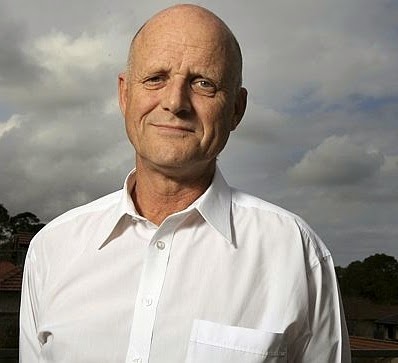
Image (L) Senator elect, David Leyonhjelm. 
With less than a day left until the release of the Abbott government’s first budget, we are hearing plenty of horror scenarios as to what it will contain.  It appears certain though that it will include tax and excise increases as well as cutbacks in services.

In something of a first for minor parties, the Liberal Democrat Party (Australia’s libertarians) has bitten the bullet and released its own budget, proving that it is a serious player in the nation’s political spectrum.  Significantly, rather than the Liberals continuing deficits, the LDP has come up with a surplus without raising taxes.
This surplus may be a modest $3.1 billion, but it is a lot better than the government is expected to do, and actually lowers taxes on the upper end of the tax scale: 
DAVID LEYONHJELMThe Coalition government will release its first budget on Tuesday which will set the tone for the rest of the time in office. There is speculation that the government will make some difficult decisions to get the budget back on track. I hope those predictions are correct, but I fear they will be wrong. 
The commission of audit was a good start, but it didn’t go far enough in cutting back on government over-spending. Unfortunately, the government is probably going to water down the recommendations even further, announcing yet another budget deficit and (like Labor) making vague promises about a surplus somewhere in the future. 
The budget should be in surplus in 2014-15 and that is what the Liberal ­Democrats’ proposed budget would achieve. Anything less should be considered failure. It is easy (and accurate) to blame our current budget problems on the waste of the previous government, but that does not mean the new government should shirk its responsibility. 
The first budget of a new government speaks volumes about whether it is serious, and if the Liberal/National government does not make the tough decisions now, they never will. …… The current government has spoken at length about the need for economic reform, but has so far been silent on the two most obvious areas where reform would boost economic prosperity – income tax cuts and labour market deregulation. 
Instead, the government is now considering income tax increases, which is not only contrary to previous undertakings but also economic folly since it will raise nearly no revenue while slowing the economy. Tax increases are a step in the wrong direction; we need income tax cuts. 
Tax cuts must be linked with spending cuts. In Australia every year, nearly $200 billion is taken from workers and then given back to the same families in the form of ­government handouts or subsidies. This is wasteful, inefficient and unnecessary. Below I outline various ways to reduce middle class access to government handouts, but the quid pro quo of that must be income tax cuts so that productive people can keep the rewards of their hard work. 
Not only will tax cuts reduce the wasteful tax-welfare churn, but lower income tax rates will encourage investment and innovation, reduce tax avoidance and boost economic growth, resulting in more jobs and higher wages for all Australians. 
The top marginal tax rates in Australia exist mostly because of the politics of envy. It is well known that the top tax rate raises very little revenue while causing significant economic costs, and that the main reason it is retained is to pander to the tall poppy syndrome. We can no longer afford such petty indulgences if we wish to encourage our highly skilled people to direct themselves toward the productive economic service of others, and to reward those efforts. 
The top marginal tax rate (45 per cent) should be abolished, which would mean the second top rate (37 per cent) became the top rate. Going further, a top tax rate of 37 per cent is still too high and causes significant economic damage. This should be cut down to 33 per cent. Once we factor in the falsely named “Medicare levy” this would bring it to 35 per cent. While this is still too high, further cuts should perhaps wait until they can be part of more fundamental tax reform as budgetary circumstances improve. 
These tax cuts will not change revenue by very much, since the lower rates will be offset with a larger tax base . Using mainstream estimates of the “elasticity of taxable income” and measures of income dispersion calculated from ATO statistics, the proposed reform will lead to a relatively modest loss of only $3 billion. The full consequences of the tax changes are shown in the below chart. …
… The relationship between the minimum wage and employment is measured by the “minimum wage elasticity of labour demand”, for which the best estimates in Australia comes from a study done by Andrew Leigh (now a Labor MP) in which he found an elasticity of minus 0.29. 
Using the estimates from Leigh and current inflation figures, it is simple to calculate that a minimum wage freeze would result in about 100,000 new jobs for low-skilled workers, reducing the unemployment rate from 6 per cent down to about 5.5 per cent (depending on participation rate changes). 
While the economic benefits from more work and less welfare are significant, the social consequences of helping people avoid welfare dependence is a potentially larger (though unquantifiable) benefit. The main cause of poverty in Australia is unemployment and anybody who truly cares about combating poverty must celebrate any policy that helps people find a job. … 
… The biggest single cost for the government is direct welfare spending, in particular family payments and pensions. While some people like to complain about so-called “dole bludgers”, the truth is that unemployment allowances are relatively modest ($11 billion) compared with the cost of family payments ($36 billion) and assistance for the aged ($58 billion). In particular, family payments are often not well targeted and amount to middle-class welfare. Both the Centre for Independent Studies and the Commission of Audit suggested removing Family Tax Benefit (part B) and the Schoolkids Bonus, saving about $6 billion. 
Pension reform is necessary, but this is not an area where costs can be decreased quickly. In the short term, the government should introduce a one-year freeze on all increases in welfare payments. This would save about $4 billion a year. …
Read the whole thing at the link above.


Apr 25, 2014

An alternative to Chris Berg’s views on breaking election promises


Statements on a theme:
“Voters need to ask themselves who they trust to protect jobs and guide the economy through a new age of uncertainty.” – Kevin Rudd
"This election will be about trust." – Tony Abbott
This election, like never before, is about who you can trust - Christine Milne
“From this day forth, you put your trust... in me.” – Lord Voldemort.
During the 2013 election, the economically literate were dismayed as then opposition leader, Tony Abbott in question after question ruled out any action that would reduce the profligate waste of taxpayers money that had been occurring under Labor, to the point where he was willing to embrace every big spending ‘initiative’ that Rudd came up with.
The reality was that with Labor less popular than a dose of clap and major concern in the electorate at the ever-increasing deficits and escalating national debt, he pretty much had carte blanche to offer to take the hard decisions necessary to pull the nation back into gear.  He would have been cheered for it.
He didn’t have the courage to do it and now has to tread the tightrope between the need for action, and his ruling out most of those very actions.
Cartoon: By R May 
Chris Berg has offered some helpful tips: 
… Here's one answer. Parties don't see election promises as promises in the plain English meaning of the word. Instead, promises are signals designed to express a deeper character of the political party. When Abbott promised not to change the pension and not to cut public broadcasters he was trying to signal that his would not be a radical government; that he was firmly targeting the median voter. 
After all, why give the SBS promise? Did it win any marginal votes? Surely not. But it did suggest to the electorate he had no secret plan to burn through Australia's institutions. Promises like that increase the political cost of radical action. 
This practice is of course deeply deceptive - election promises as signals rather than genuine commitments - but it's a deception we're used to. 
Voters are rational. We know campaign nonsense when we see it. As this interesting 2004 paper points out, voters infer the true policy position of candidates for office despite the thicket of untruths. 
Obviously Coalition failures deserve to be treated as harshly as Labor failures were. Perhaps more. The Coalition swore to be guided by higher ethical standards than its predecessors. 
But let's not pretend to be surprised. Australia is one of the world's oldest democracies. We've been voting for broken promises for a very long time.
To some extent Berg is correct, although normally incoming governments find an excuse to break their promises as early as possible in their tenure.
Whitlam claimed that the problem with the economy was that we had too much money sloshing around in our pockets and the responsible thing for government to do was to increase taxes to absorb that which we didn’t need.
Malcolm Fraser was too arrogant to give us a reason to break his, but Hawkie and Keating came up with a budget ‘black hole’ and offered us consensus.  Under consensus, the government would negotiate with the opposition in order to decide the position they would like us to be in, and what to do with us when they had us there.  The result was, that rather than being screwed by the government, we were gangied by the parliament as a whole.
It hasn’t gotten any better since.
One of Tony’s options is the use of the term core, and non-core promises.  That though has been done already.
On the serious side though, there are plenty of options available.
While Abbott promised not to reduce the funding for the ABC and SBS, he said nothing about keeping them in public ownership.  Fairfax already provides left wing bias quite effectively in the private sector, so there is really no need for the government to duplicate that service.  There is nothing wrong with the ABC that couldn’t be fixed by Kerry Stokes, James Packer, Rupert Murdoch, or Gina Rinehart.
The Department of Climate Change could be abolished.  It would simply require an acknowledgement that the government hasn’t the competency to change the climate, certainly not for the better.  
While doing this, forget the idiotic climate action plan, abolish the ‘Clean Energy Finance Corporation’, the renewable energy target, subsidies on wind, solar, etc, and mandates on the use of renewables.  This would save billions.
There is considerable scope for the abolition of all federal government departments that duplicate state government ones.  The states themselves can run their own affairs in ways that are better suited to their individual circumstances better and more efficiently than can be done by a distant bureaucracy,
Where coordination is needed, the relevant state ministers can do this.
All of the departments left will probably go out on strike in solidarity with their fellow public servants.  When this happens, the government should examine the effects, and abolish all of those, which cause no inconvenience to the public by their absence.
By this time the budget crisis would be solved and we would be back in surplus again, but we can go further.  The SPC issue proved that there is really no need for taxpayers to pad the profit margins of Coca Cola Amatil.  There is no reason why any corporate welfare should continue; the government having made a nice start here.  It should then look at the inefficient churn of middle class welfare which would no longer be required as everyone would benefit from the substantial tax cuts the above would make possible.